
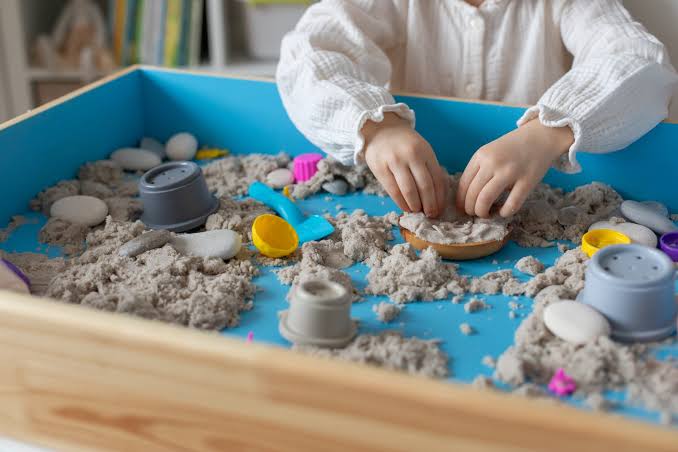
“What’s wrong?”
“I don’t know.”
“What happened at school today?”
“Nothing.”
If you’re a parent, you may have had conversations like these.
You can see that your child is upset, withdrawn, frustrated, or behaving differently. But when you ask what’s happening, they don’t seem to know how to explain it.
That doesn’t necessarily mean they don’t want to talk to you.
Sometimes, children simply don’t have the language or emotional development to describe what they’re experiencing.
A child may know that something feels wrong without knowing whether they are worried, angry, embarrassed, lonely, overwhelmed, or sad.
This is one reason play can be so meaningful in children’s therapy.
For children, play is more than entertainment. It is one of the ways they naturally explore the world, practice relationships, express themselves, solve problems, and make sense of experiences.
Play therapy uses developmentally appropriate play within a therapeutic relationship to help children explore emotions, experiences, relationships, and coping skills in ways that feel accessible to them.
At Innerlogue Therapy & Psychology, we recognize that children don’t always need to “talk it out” in the same way adults do. Sometimes, they need a safe space where they can play, create, express themselves, and gradually develop the words to understand what they are experiencing.
Why Is It So Hard for Children to Talk About Big Feelings?
Adults often expect children to explain their emotions in words.
We might ask:
“Why are you angry?”
“What made you sad?”
“Why are you anxious?”
But emotional awareness and communication develop over time.
A young child may experience a powerful emotional or physical reaction without fully understanding what caused it. Even older children may struggle to explain complicated feelings, especially when they are overwhelmed.
Instead, emotional distress may show up through behaviour.
A child might:
- Become unusually clingy
- Have more frequent tantrums
- Stop wanting to go to school
- Become more aggressive or irritable
- Withdraw from family members
- Have difficulty sleeping
- Cry more often
- Become unusually quiet
- Return to behaviours they had previously outgrown
- Complain of stomachaches or headaches
- Become extremely frustrated over seemingly small things
These behaviours do not automatically mean a child has a mental health concern. Children can respond to stress, change, and difficult experiences in many different ways.
But when changes persist, become more intense, or begin interfering with everyday life, they may be worth exploring.
Sometimes, behaviour is a child’s way of communicating something they cannot yet put into words.
Play Is a Child’s Natural Way of Communicating
Imagine asking a four-year-old to explain a complicated emotional experience.
They may not have the vocabulary to say:
“I’ve been feeling insecure about the changes happening in my family, and I don’t know how to express it.”
Instead, they might repeatedly create stories about a character who gets lost, becomes angry, needs help, or is separated from someone they love.
This does not mean that every toy, drawing, or story has a hidden psychological meaning.
Rather, play gives children a developmentally appropriate way to explore experiences.
Through play, children can experiment with relationships, emotions, roles, problem-solving, and different possible outcomes.
A trained therapist can participate in this process while paying attention to the child’s communication, emotional responses, strengths, and needs.
The goal isn’t to decode every action.
It is to create a relationship and environment where the child can safely explore what they are experiencing.
What Is Play Therapy?
Play therapy is a therapeutic approach that uses play and other developmentally appropriate activities to support children’s emotional and psychological wellbeing.
Rather than expecting a child to sit and talk about their feelings for an entire session, a therapist may use:
- Toys and figures
- Games
- Drawing and art
- Storytelling
- Puppets
- Imaginative play
- Movement
- Creative activities
- Emotion-based activities
- Structured therapeutic exercises
The approach depends on the child’s age, personality, needs, and treatment goals.
Play therapy may help children:
- Express emotions
- Develop emotional vocabulary
- Build coping skills
- Practice problem-solving
- Explore difficult experiences
- Develop confidence
- Improve communication
- Understand relationships
- Develop emotional regulation skills
The therapist isn’t simply watching a child play.
There is a therapeutic purpose behind the interaction.
How Does Play Therapy Actually Work?
A play therapy session may look very different from traditional adult therapy.
A child might build something with blocks, play with dolls or figures, draw, use puppets, play a structured game, create a story, or engage in imaginative play.
The therapist may participate in the activity, observe, reflect emotions, introduce therapeutic exercises, or help the child practice new ways of responding to challenges.
At the heart of the process is the therapeutic relationship.
Over time, the child can begin to experience:
“I am safe here.”
“I can express myself.”
“Someone is listening to me.”
“My feelings are okay.”
“I don’t have to figure everything out by myself.”
That sense of safety can make it easier for children to explore emotions and experiences that may otherwise feel difficult to approach.
Play Can Give Children Some Distance From Difficult Experiences
Sometimes, talking directly about something painful can feel overwhelming.
Play can provide a little emotional distance.
Instead of saying:
“I’m scared about what happened.”
A child might create a story about a character who is scared.
Instead of directly discussing conflict at home, they might act out a family scenario using toys.
Instead of explaining that they feel powerless, they might create a story where a character finds a way to solve a difficult problem.
Again, therapists should be careful not to assume that every element of a child’s play represents something specific.
The value can come from giving the child an opportunity to explore experiences symbolically and creatively, at a pace that feels manageable.
Play Therapy Can Help Children Understand Their Emotions
Children don’t always have a complete emotional vocabulary.
They may know:
“I feel bad.”
But “bad” could mean angry, worried, disappointed, lonely, embarrassed, jealous, overwhelmed, or frightened.
Part of therapy can involve helping children become more aware of these differences.
Through stories, games, drawings, and therapeutic activities, children can learn:
- What different emotions feel like
- How emotions can show up in the body
- What situations may trigger certain feelings
- That more than one emotion can happen at the same time
- That emotions change over time
- That having an emotion does not mean they have to act on it
This emotional awareness can become an important foundation for self-regulation.
Learning That Feelings Are Safe to Express
Some children learn, intentionally or unintentionally, that certain emotions are not welcome.
They may hear:
“Don’t cry.”
“You’re fine.”
“There’s nothing to be scared of.”
“Stop being angry.”
Parents usually say these things because they want to help their child feel better or calm down.
But a child may interpret them differently:
“I’m not supposed to feel this way.”
Therapy can help children learn that emotions themselves are not dangerous or wrong.
Anger can be acknowledged while harmful behaviour still has boundaries.
Fear can be expressed without allowing fear to control every decision.
Sadness can be experienced without needing to immediately make it disappear.
The goal isn’t to make children happy all the time.
It is to help them become more comfortable experiencing, understanding, and managing a full range of emotions.
Play Therapy for Anxiety
Children experiencing anxiety don’t always say:
“I’m feeling anxious.”
Instead, anxiety may show up through behaviour.
A child might avoid school, repeatedly ask for reassurance, become distressed when separated from a parent, complain of physical symptoms, worry excessively about making mistakes, or become upset when routines change.
Play therapy can give children developmentally appropriate ways to explore fear and uncertainty.
Through therapeutic play and activities, children can practice coping strategies, build confidence, and develop a better understanding of their anxious responses.
The therapist can also help parents understand what may be happening beneath the behaviour and how they can support their child outside of sessions.
Play Therapy for Anger and Emotional Regulation
Anger can be particularly difficult for children to understand.
A child may know that they are angry without knowing what triggered the emotion or what to do with it.
Play therapy can provide opportunities to practice:
- Identifying anger triggers
- Recognizing physical warning signs
- Taking a pause before reacting
- Using calming strategies
- Expressing needs
- Solving problems
- Communicating feelings
- Repairing relationships after conflict
An important distinction in therapy is that having anger is different from acting aggressively.
Children can learn that anger is a valid emotion while also learning that certain behaviours are not okay.
The goal is not to eliminate anger.
It is to help children understand what their anger is communicating and develop safer ways to respond.
Play Therapy After Major Changes or Difficult Experiences
Children may also benefit from therapeutic support when they are adjusting to significant changes or stressful experiences.
These may include:
- Separation or divorce
- Moving to a new home
- Changing schools
- Family conflict
- Loss or grief
- Bullying
- Friendship difficulties
- Medical experiences
- Frightening events
- Changes in family structure
- Other significant stressors
Children process change differently from adults.
A child may initially appear to be doing fine and begin showing emotional or behavioural changes later.
Play therapy can provide a space where children can gradually explore those experiences without being expected to explain everything immediately.
What Does a Play Therapy Session Look Like?
Parents sometimes wonder:
“Is my child just going to spend an hour playing with toys?”
It’s an understandable question.
The therapeutic value comes from more than the toys or activities themselves. The therapist’s clinical training, the therapeutic relationship, and the purpose behind the interventions are important parts of the process.
Depending on the child’s needs, a session may include:
- Child-led play
- Structured therapeutic games
- Art and creative activities
- Storytelling
- Puppets or role-play
- Emotion-identification activities
- Coping-skills practice
- Problem-solving activities
- Parent-child activities
Not every session will look the same.
The therapist adapts the approach according to the child’s developmental level, personality, concerns, and treatment goals.
Parents Are an Important Part of the Process
Play therapy isn’t about taking children away from their parents and expecting therapy to solve everything.
Parents are often an important part of a child’s emotional development.
Depending on the therapeutic approach and the child’s needs, a therapist may work directly with the child, provide parents with strategies, or incorporate parent-child work into treatment.
Parents may learn how to:
- Validate emotions
- Respond to challenging behaviour
- Set appropriate boundaries
- Support emotional regulation
- Strengthen connection
- Communicate more effectively
- Encourage healthy coping
Sometimes, small changes in how an adult responds can make a meaningful difference in how a child experiences difficult emotions.
Therapy can support the child while also helping parents feel more confident in responding to what they are seeing at home.
“My Child Won’t Talk to a Therapist”
This is one of the most common concerns parents have.
Fortunately, children don’t need to walk into their first therapy session ready to talk openly about everything.
Building trust takes time.
A child may initially be shy, cautious, resistant, playful, or unsure about why they are there.
That’s okay.
A therapist can work at the child’s developmental level and allow the therapeutic relationship to develop gradually.
For some children, play provides a much more comfortable starting point than being asked to immediately explain their most difficult feelings.
The goal is not to force a child to talk.
It is to create enough safety that communication can develop naturally.
How Do I Know If My Child Might Benefit From Play Therapy?
Every child has difficult days.
A tantrum, bad mood, worry, or emotional outburst does not necessarily mean a child needs therapy.
Professional support may be worth considering when emotional or behavioural changes are:
- Persistent
- Increasing in frequency or intensity
- Affecting school
- Affecting friendships
- Affecting family relationships
- Interfering with sleep
- Causing significant distress
- Making everyday activities more difficult
Parents can also seek support when they simply feel that something has changed and they aren’t sure how to help.
You don’t need to wait for a problem to become severe before asking questions.
Sometimes, early support can give a child and family additional tools before difficulties become more disruptive.
Play Therapy in Calgary
If you’re looking for play therapy in Calgary, finding a therapist who understands child development and has experience working with children can be an important part of the process.
At Innerlogue Therapy & Psychology, our therapists recognize that children communicate and process experiences differently from adults.
Therapy is adapted to the child’s developmental stage, personality, needs, and circumstances.
Our Calgary locations in Kensington, Midnapore, and Harvest Hills provide options for families across the city, with virtual services also available across Alberta when appropriate.
Whether your child is experiencing anxiety, emotional regulation difficulties, behavioural changes, family transitions, social challenges, or other concerns, therapy can provide a supportive environment where they can feel understood and develop skills for managing difficult experiences.
Your Child Doesn’t Have to Have the Words Yet
Sometimes parents worry because their child can’t explain what is wrong.
But a child doesn’t need to have the perfect words before they deserve support.
They may communicate through play.
They may communicate through behaviour.
They may communicate through drawings, stories, movement, silence, or the way they interact with others.
As therapists, our role is not to assume that every behaviour has one hidden meaning.
It is to pay attention, build trust, and create a space where children can explore what they are experiencing in ways that feel safe and developmentally appropriate.
Play therapy can help children develop the emotional language and coping skills they need as they grow.
Because sometimes, before a child can say:
“This is what I’m feeling,”
They need a safe place to discover what that feeling is.
And sometimes, the first step toward understanding a big feeling is simply having a safe place to play.